
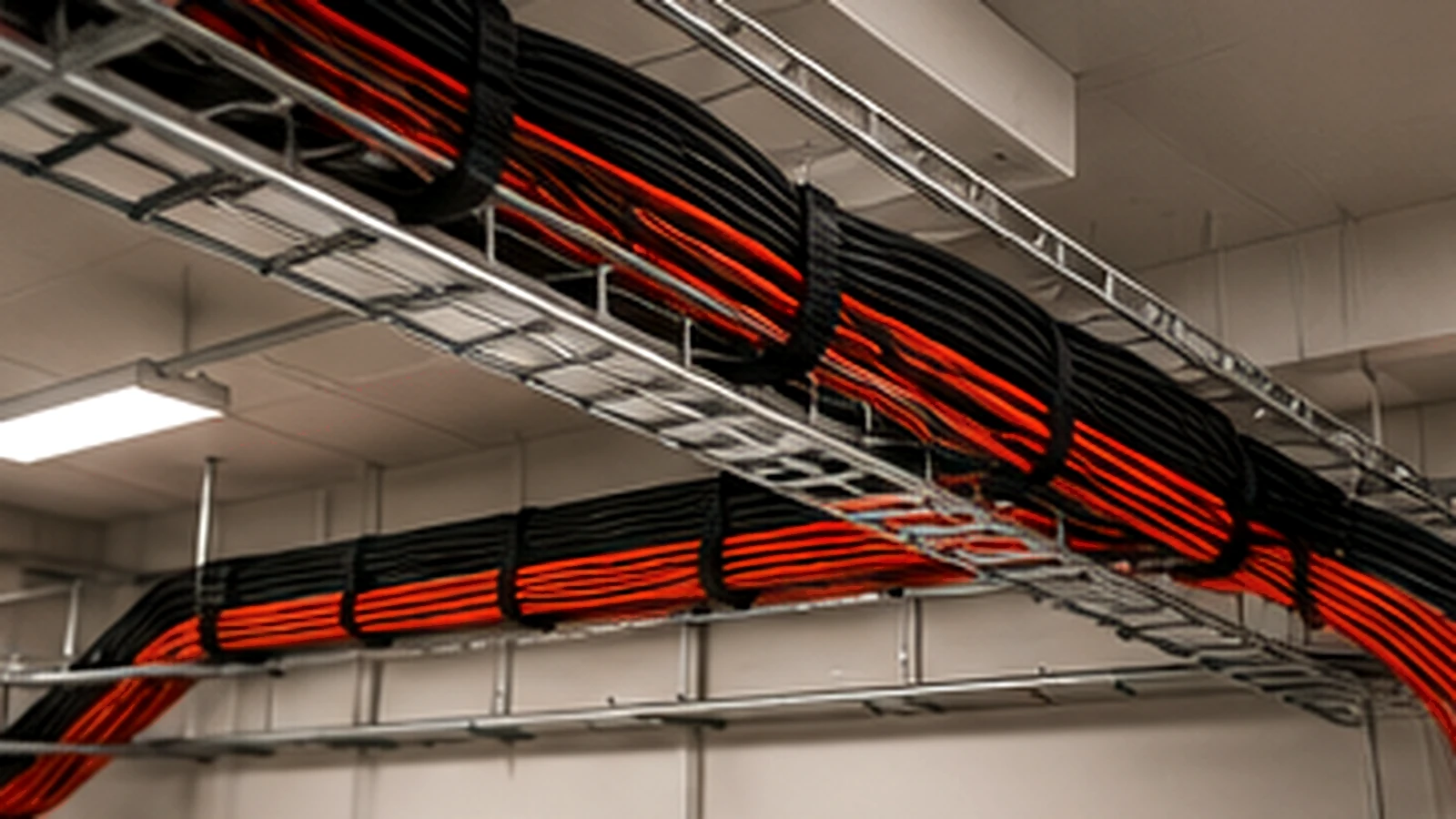
The number of cable drops is important, but it is not a complete commercial cabling budget. Two projects with the same outlet count can have very different pathways, distances, schedules and closeout requirements.
Define what a “drop” includes
A useful estimate states what is included at both ends: cable, supports, jack, faceplate, patch-panel port, labels, termination, testing and patch cords if required. It should also define cable category and manufacturer or performance requirements.
Count every connected system, not only computers. Wireless access points, phones, printers, cameras, access control, displays and building systems may share the structured-cabling scope.
Survey the route
Pathway conditions drive labor and material. Review:
- Accessible versus hard ceilings
- Conduit, tray and existing supports
- Ceiling height and lift requirements
- Fire-rated penetrations
- Furniture pathways and floor boxes
- Distance to the serving telecom room
- Occupied-area protection and restoration
A floor plan can help, but field conditions decide whether the drawn route is usable.
Include the telecom room
New drops need patch-panel ports, management and often switch capacity. Check rack units, cabinet depth, grounding coordination, power, cooling, fiber uplinks and the condition of existing patching.
If the room is already crowded, a small outlet project can trigger a larger organization or expansion requirement.
Account for schedule and access
After-hours work, security escorts, badging, loading restrictions and short maintenance windows affect cost. So do phasing and return trips caused by construction readiness.
Multi-site work benefits from a standard scope, but travel and local access still need to be modeled. A pilot location can expose assumptions before they repeat across every site.
Decide the closeout standard
Specify label format, test method, pass/fail limits, as-built information, photographs and electronic file format. Good records have a cost, but missing records transfer cost into every future change and troubleshooting event.
Use ranges carefully
An early per-drop planning figure can help compare options, but it should not be presented as a construction proposal. Our Network Cabling Budget Estimator uses transparent planning rates and clearly separates office, industrial, cabling-upgrade and rack assumptions.
A verified proposal should follow a survey or sufficiently detailed drawings. It should state exclusions such as electrical work, permits, hazardous material, patching and painting, firestopping responsibility, lifts and active equipment.
Data Infra can survey and develop a complete structured cabling scope for a new facility, renovation or focused network expansion.